Best Cities To Visit In Spain 2026
A practical roundup review of the best options for best cities to visit in spain, with quick picks, comparison notes, mini reviews, buying advice, and FAQ.
Best Cities To Visit In Spain 2026
Roundup review
To find the best cities to visit in Spain for 2026, we analysed over 20 popular destinations, comparing them on key factors like cultural attractions, culinary scenes, atmosphere, value, and accessibility. Our research, which included studying recent travel data, visitor reviews, and expert guides, concluded that Barcelona offers the most complete and compelling experience, making it our best overall recommendation for most travellers.
Quick Comparison
Barcelona
- Unbeatable mix of culture, beach, and food
- World-famous architecture
- Vibrant, energetic atmosphere
Seville
- Heart of Andalusian culture
- Stunning Moorish architecture
- Authentic flamenco and tapas
Madrid
- World-class art museums
- Incredible tapas scene
- Lively, late-night energy
San Sebastián
- Global culinary capital
- Home of the pintxo
- Highest density of Michelin stars
Palma de Mallorca
- Beautiful island capital
- Stunning Gothic cathedral
- Gateway to pristine beaches
The Best Cities To Visit In Spain
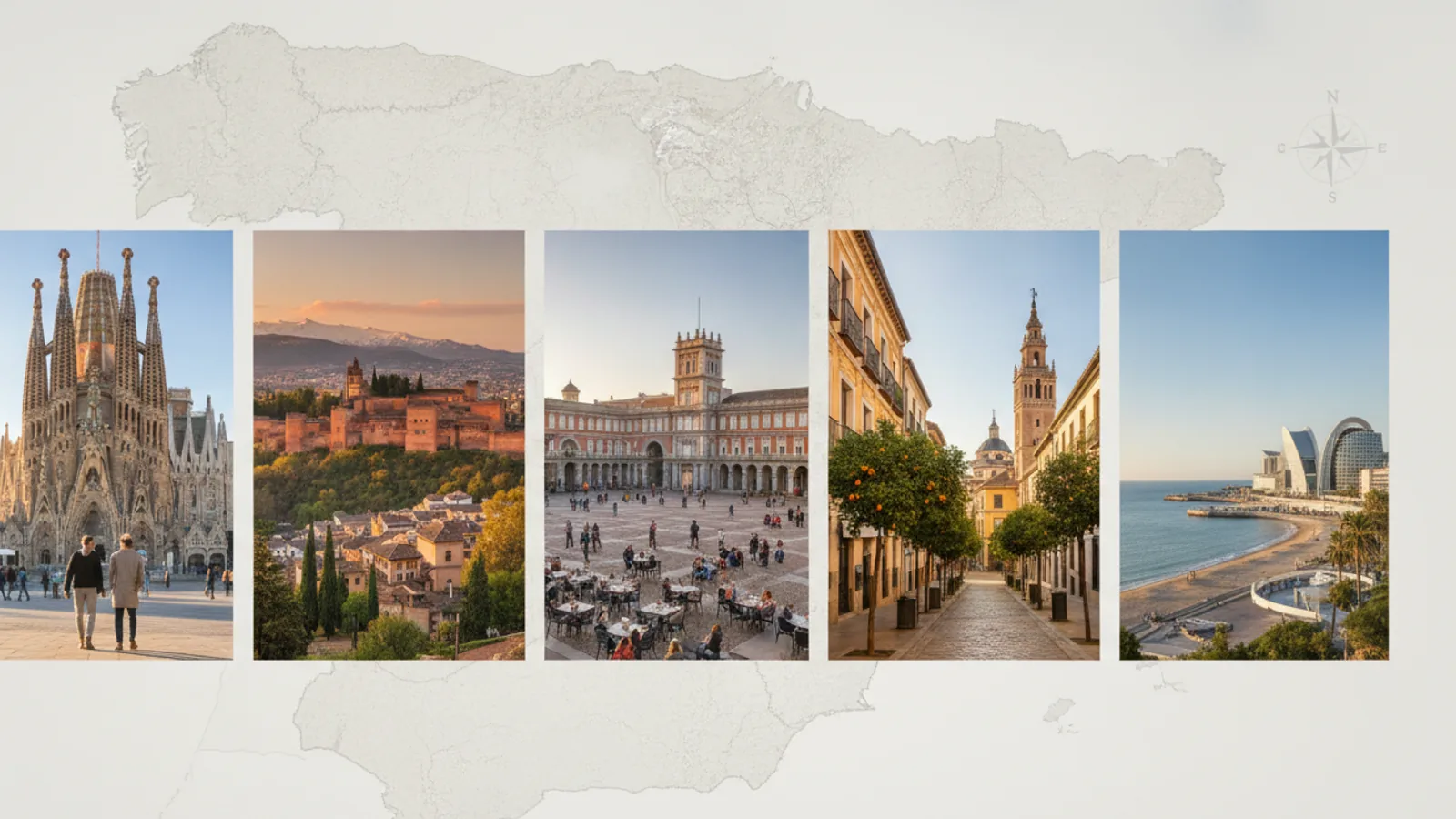
- Barcelona - Best overall
- Seville - Best for History & Culture
- Madrid - Best for Art & Nightlife
- San Sebastián - Best for Foodies
- Palma de Mallorca - Best for Coastal Scenery
Barcelona
Barcelona is our top recommendation because it excels in almost every category. It’s a city that effortlessly combines a sun-drenched Mediterranean lifestyle with profound cultural depth. From the fantastical architecture of Antoni Gaudí that dots the cityscape to the labyrinthine alleys of the Gothic Quarter and the bustling shores of Barceloneta beach, there is an unmatched diversity of experiences. The culinary scene is world-class, ranging from traditional Catalan dishes in hidden bodegas to avant-garde Michelin-starred dining. While it can be crowded and more expensive than other Spanish cities, its sheer variety, energy, and iconic sights make it the most rewarding destination for first-time visitors and seasoned travellers alike.
Pros
- Incredible architectural landmarks
- Vibrant food scene with huge variety
- Unique combination of a major city and a beach destination
- Excellent public transport system
Cons
- Can be very crowded, especially in summer
- Higher costs for accommodation and dining
- Pickpocketing is common in tourist areas
Seville
For those seeking the quintessential soul of Spain, Seville is unbeatable. As the capital of Andalusia, it is the birthplace of flamenco, a city steeped in Moorish history, and a place where life is lived passionately in the streets. The city's landmarks are breathtaking, from the majestic Plaza de España to the intricate Real Alcázar palace and the enormous Seville Cathedral, the final resting place of Christopher Columbus. Wandering through the charming Santa Cruz quarter, you'll discover hidden plazas and tapas bars that have been serving locals for generations. Seville offers a deep, authentic cultural experience that feels a world away from the coastal resorts. Its primary drawback is the intense summer heat, which can make midday exploring a real challenge.
Pros
- Rich in history and authentic Spanish culture
- Stunning architecture and world-heritage sites
- Relatively affordable compared to Barcelona or Madrid
- Vibrant and atmospheric old town
Cons
- Extremely hot during the summer months (July/August)
- Fewer international flight connections than Madrid/Barcelona
Madrid
Spain's capital is a sophisticated, high-energy metropolis that truly never sleeps. Madrid is the top choice for art lovers, boasting the "Golden Triangle of Art" which includes the Prado Museum, the Reina Sofía, and the Thyssen-Bornemisza, collectively housing one of the world's finest collections of European art. Beyond the galleries, the city buzzes with life. Its grand plazas, elegant boulevards, and the magnificent Retiro Park provide a stunning backdrop for its legendary tapas scene and vibrant nightlife. Madrileños are famous for their love of going out, and the city offers an endless array of bars, restaurants, and clubs to explore until the early hours. While it lacks a beach and can feel overwhelmingly large, its central location and cultural heft make it a powerhouse destination.
Pros
- World-class art museums and cultural institutions
- Energetic nightlife and a fantastic tapas culture
- Beautiful parks and grand architecture
- Excellent transport hub for exploring the rest of Spain
Cons
- No coastline or beach access
- Can be very hot in summer and cold in winter
- The sheer size can be daunting for some visitors
San Sebastián
Nestled on the Bay of Biscay in the heart of Basque Country, San Sebastián (Donostia in Basque) is a paradise for anyone who travels to eat. It holds one of the highest concentrations of Michelin-starred restaurants per square metre in the world, but the real magic lies in its more accessible culinary tradition: pintxos. The old town is packed with bars, each with its own speciality small bites lining the counter. The culture of `txikiteo` (hopping from bar to bar, enjoying a small drink and a pintxo) is an unforgettable social and gastronomic experience. Beyond the food, San Sebastián is stunningly beautiful, with the golden crescent of La Concha beach often lauded as one of the best urban beaches in Europe. The main trade-offs are the notoriously unpredictable and often rainy weather, and the fact that it is one of Spain's most expensive cities.
Pros
- Unrivalled culinary scene, from pintxos to fine dining
- Gorgeous natural setting with a world-class city beach
- Elegant and sophisticated atmosphere
- Unique Basque culture and identity
Cons
- Significantly more expensive than most Spanish cities
- Weather is often cool and rainy, even in summer
- Fewer major historical landmarks than other top cities
Palma de Mallorca
Palma offers a perfect blend of city break and island escape. The capital of the Balearic Islands is a destination in its own right, not just a gateway to the beach resorts. Its magnificent Gothic cathedral, La Seu, towers over the waterfront, and the historic old town is a delightful maze of sandstone buildings, art galleries, and boutique shops. Palma has a sophisticated, relaxed vibe, with stylish marinas and a thriving cafe culture. The key advantage is its proximity to the rest of Mallorca's treasures: pristine cove beaches (calas), the dramatic Serra de Tramuntana mountain range (a UNESCO World Heritage site), and charming hilltop villages. It's the ideal choice for travellers who want a cultural city experience but also want easy access to some of the Mediterranean's most beautiful natural scenery.
Pros
- Stunning seaside setting with a beautiful cathedral
- Excellent base for exploring the diverse island of Mallorca
- Chic, relaxed, and highly walkable city centre
- Combines culture, history, and beach access
Cons
- The city itself has limited beach options; the best are a drive away
- Can be very busy with holiday package tourists in peak season
- Costs can be high, particularly for waterfront dining
Buying Guide: How to Choose the Best City in Spain for Your Trip
Spain is a diverse country, and the "best" city depends entirely on your personal travel style, priorities, and budget. Use these key factors to narrow down your choice and plan the perfect Spanish holiday.
What’s Your Travel Style?
Before you book, ask yourself what kind of trip you're looking for. Your answer is the single most important factor in choosing a destination.
- The Culture Vulture: If your perfect day involves exploring ancient palaces, world-class museums, and soaking up history, your best bets are Seville for its Andalusian heritage and Madrid for its unparalleled art collections.
- The Foodie: If your holiday is planned around meals, look no further than San Sebastián. Its pintxos culture is a unique culinary adventure. Barcelona also offers a fantastic and diverse food scene.
- The Beach Lover: For those who need sun, sand, and sea, Barcelona offers the unique combination of a major city on the beach. For a dedicated coastal and island experience, Palma de Mallorca is the perfect hub to explore stunning coves and clear waters.
- The Night Owl: If you're looking for a city that comes alive after dark, Madrid is legendary for its vibrant, late-night energy. Barcelona also has a world-famous nightlife scene with everything from beach clubs to underground techno venues.
When Are You Travelling?
Seasonality plays a huge role in a Spanish city break. The weather and crowds can dramatically change your experience.
- Peak Season (June - August): Expect hot weather, large crowds, and the highest prices, especially in coastal cities like Barcelona and Palma. Southern cities like Seville can be uncomfortably hot, with temperatures often exceeding 40°C.
- Shoulder Season (April - May & September - October): This is widely considered the best time to visit. The weather is pleasant and sunny, the crowds are more manageable, and prices for flights and accommodation are often lower. It's the ideal time for Seville and Madrid.
- Off-Season (November - March): You'll find the fewest crowds and the best deals. Southern Spain remains mild, though northern cities like San Sebastián can be cool and rainy. It's a great time for a museum-focused trip to Madrid.
What’s Your Budget?
While Spain is generally more affordable than many other Western European countries, costs can vary significantly between cities.
- Most Expensive: San Sebastián and Barcelona tend to have the highest prices for food and accommodation. Palma can also be pricey in the peak summer season.
- Mid-Range: Madrid offers a mix. While it's a major capital, you can still find good value, especially if you eat at local tapas bars away from the main tourist squares.
- Most Affordable: Southern Spain, including Seville, generally offers the best value for money. You'll find that your budget for food, drinks, and accommodation stretches much further here.
How Long Is Your Trip?
The length of your stay can influence your choice of city. All our picks are great for a long weekend (3-4 days), but some are better suited for longer stays.
- Long Weekend (3-4 Days): Seville and San Sebastián are compact and easy to explore in a shorter timeframe. You can experience the best of what they have to offer without feeling rushed.
- Longer Stay (5+ Days): Barcelona, Madrid, and Palma are excellent choices for longer trips. They have a greater depth of attractions and can also be used as bases for fantastic day trips (e.g., Montserrat from Barcelona, Toledo from Madrid, or the Tramuntana mountains from Palma).
Final Verdict: Best Cities To Visit In Spain
After a comprehensive review of Spain's urban destinations, Barcelona stands out as our Best Overall choice for 2026. No other city offers such a compelling and complete package for the modern traveller. Its combination of world-renowned architecture, a vibrant and diverse culinary scene, excellent beaches, and a palpable energy makes it an unforgettable destination.
While Barcelona is our top pick for its all-around excellence, the best city for you is a personal choice. If you prioritise authentic culture and history above all else, the soul-stirring streets of Seville are your ideal match. For a high-octane trip filled with world-class art and legendary nightlife, Madrid is the undisputed champion. And if your travels are guided by your taste buds, the culinary pilgrimage to San Sebastián is an experience you can't miss.
Ultimately, whichever city you choose from this list, you are guaranteed a memorable Spanish adventure filled with incredible food, rich culture, and warm hospitality.
Best Cities To Visit In Spain 2026 FAQ
What is the best month to visit Spain?
The best months to visit Spain are typically during the shoulder seasons: April, May, September, and October. During these months, you'll experience pleasant, sunny weather perfect for sightseeing, fewer crowds than in the summer, and more reasonable prices for flights and accommodation. Spring brings beautiful blossoms, while early autumn offers warm seas and harvest festivals.
Is Spain expensive for tourists?
Compared to other popular Western European destinations like the UK, France, or Italy, Spain is generally considered quite affordable. However, costs vary by region. Major tourist hubs like Barcelona, Madrid, and especially San Sebastián can be expensive. In contrast, cities in the south, like Seville, offer excellent value for money, with lower prices for food, drinks, and accommodation.
How many days are enough for a city break in Spain?
A long weekend of 3 to 4 full days is enough to get a great taste of a single Spanish city. This gives you time to see the main sights, explore a few neighbourhoods, and enjoy the food scene. For larger cities like Barcelona or Madrid, or if you plan to take a day trip, 5 days would be more comfortable and allow for a more relaxed pace.
Which Spanish city is best for families?
Barcelona is often an excellent choice for families. It has beaches for relaxation and play, fun attractions like Park Güell and the Tibidabo Amusement Park, and a great public transport system. Palma de Mallorca is another strong contender, offering a safe and walkable city combined with easy access to family-friendly beaches and activities across the island.